10 August 2026
Moss on Your Edinburgh Roof: When It's Cosmetic and When It's a Structural Risk
Walk down almost any street in Edinburgh and you’ll see it — a green-black carpet of moss creeping across roof tiles, especially on the shaded, north-facing slopes that never quite dry out. Most homeowners treat it as a cosmetic issue, something to deal with “eventually.” Sometimes that’s a fair call. Sometimes it isn’t, and the difference matters a lot more than it looks.
Why does moss grow so well on Edinburgh roofs?
Moss needs moisture, shade, and a rough surface to take hold, and Scottish weather hands it all three. Overhanging trees, low winter sun angles, and Edinburgh’s steady drizzle keep tiles damp for long stretches, especially on older concrete and clay tiles with a slightly porous surface. Traditional slate resists it a bit better, but nothing on a roof is immune once spores find a foothold.
When is roof moss just cosmetic?
A thin, even layer of moss confined to the surface of the tiles — not pushing up underneath them — is mostly an appearance issue. It looks unkempt from the street, but it isn’t actively damaging anything yet. This is the stage where a clean is about upkeep and prevention rather than repair.
When does moss become a structural risk?
Moss becomes a structural risk once it starts growing in clumps thick enough to lift tiles, trap water against the roof, or wash down into your gutters. A few specific warning signs are worth watching for:
- Tiles sitting slightly proud or uneven — moss roots growing under the edge of a tile physically pushes it up, breaking the overlap that keeps water out.
- Visible clumps rather than a flat layer — thick moss holds water against the tile like a sponge, which is exactly the saturation that leads to frost damage over an Edinburgh winter.
- Debris and moss washing into your gutters — a sign the growth is already shedding material, which is usually the point gutters start overflowing faster than you’d expect from rainfall alone.
- Added weight across a large roof area — moss holds a surprising amount of water once established, and older roof structures weren’t necessarily built with that extra load in mind.
If any of those apply, it’s worth getting the roof looked at rather than leaving it for another season.
Why we don’t jet wash roof tiles
The instinct to blast moss off with a pressure washer is understandable, but it’s the wrong tool for a roof. High-pressure water forced across or between tiles can lift them, drive water up under the overlap, and crack older clay and concrete stock outright — turning a moss problem into a leak. It’s the same underlying issue as pressure washing on sandstone: force damages what heat and the right chemistry can clean safely.
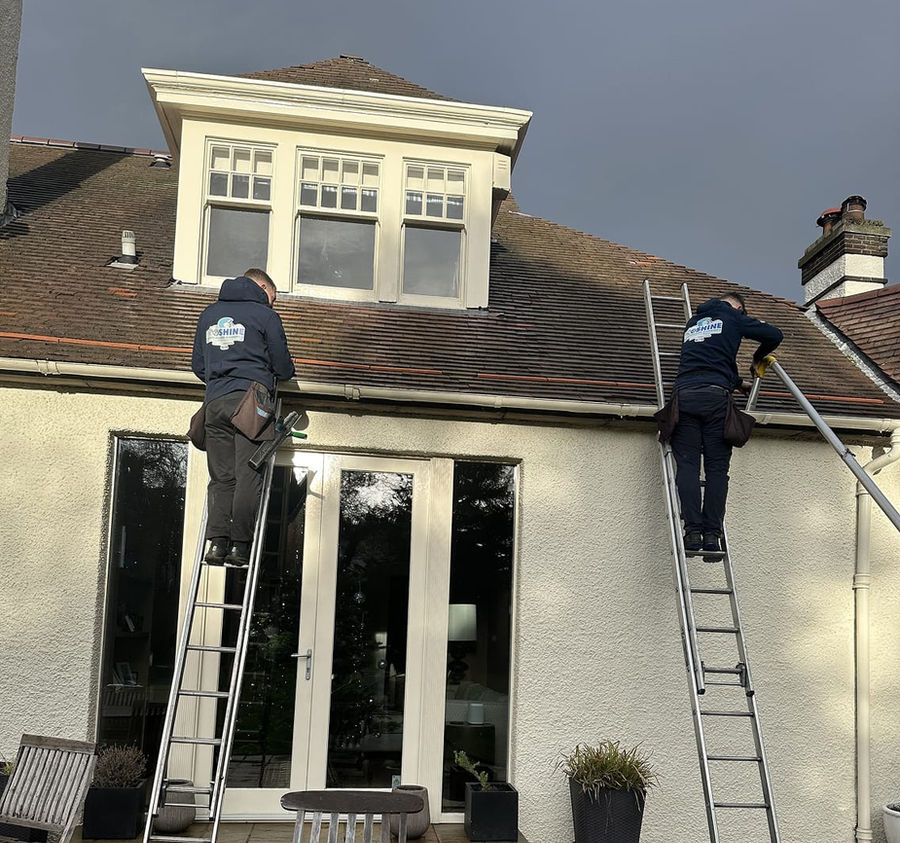
Instead, we use a low-pressure soft-wash biocide treatment that kills moss, lichen, and algae at the root without disturbing the tiles. Loosened growth is then cleared by hand, gutters and valleys are cleaned out so the debris that comes down during the wash doesn’t just re-block them, and we check ridge tiles and flashing while we’re up there — pointing out anything loose that we notice before it becomes a leak.
How often should an Edinburgh roof be cleaned?
Most roofs benefit from a check every one to two years, and more often if there’s heavy tree cover or the roof faces north. Catching moss while it’s still a surface layer is far cheaper than waiting for it to start lifting tiles — by the time you can see daylight through a gap or find damp patches on a ceiling, you’re looking at a repair bill instead of a cleaning one.
Get a proper look before it becomes a repair job
We check tile type, pitch, and how established the growth is before recommending anything, and you’ll get honest advice on when it’ll need attention again. Request your free, no-obligation roof cleaning quote.
Need this done?
Get a free roof cleaning quote
Roof need cleaning? It's not just about looks, it's also about structural integrity. Don't risk it.
View Roof Cleaning