3 August 2026
Pressure Washing vs. Steam Cleaning: Which Is Right for Your Edinburgh Property?
If you’re getting quotes for exterior cleaning in Edinburgh, you’ve probably seen both terms — “pressure washing” and “steam cleaning” — used almost interchangeably. They’re not the same thing, and using the wrong one on the wrong surface is exactly how driveways get scarred and sandstone gets damaged. Here’s the actual difference, and which one your property needs.
The short answer
Pressure washing uses high water pressure to physically blast dirt off hard, durable surfaces like concrete, block paving, and modern render. Steam cleaning uses low-pressure, superheated water — up to 150°C — to lift dirt and kill biological growth with heat rather than force, making it the safer choice for anything delicate: sandstone, tenement stonework, roof tiles, and conservatories.
If your surface can take a scrub with a stiff brush without damage, pressure washing is usually the right tool. If it’s historic, porous, or fragile, steam is the safer call.
When pressure washing is the right choice
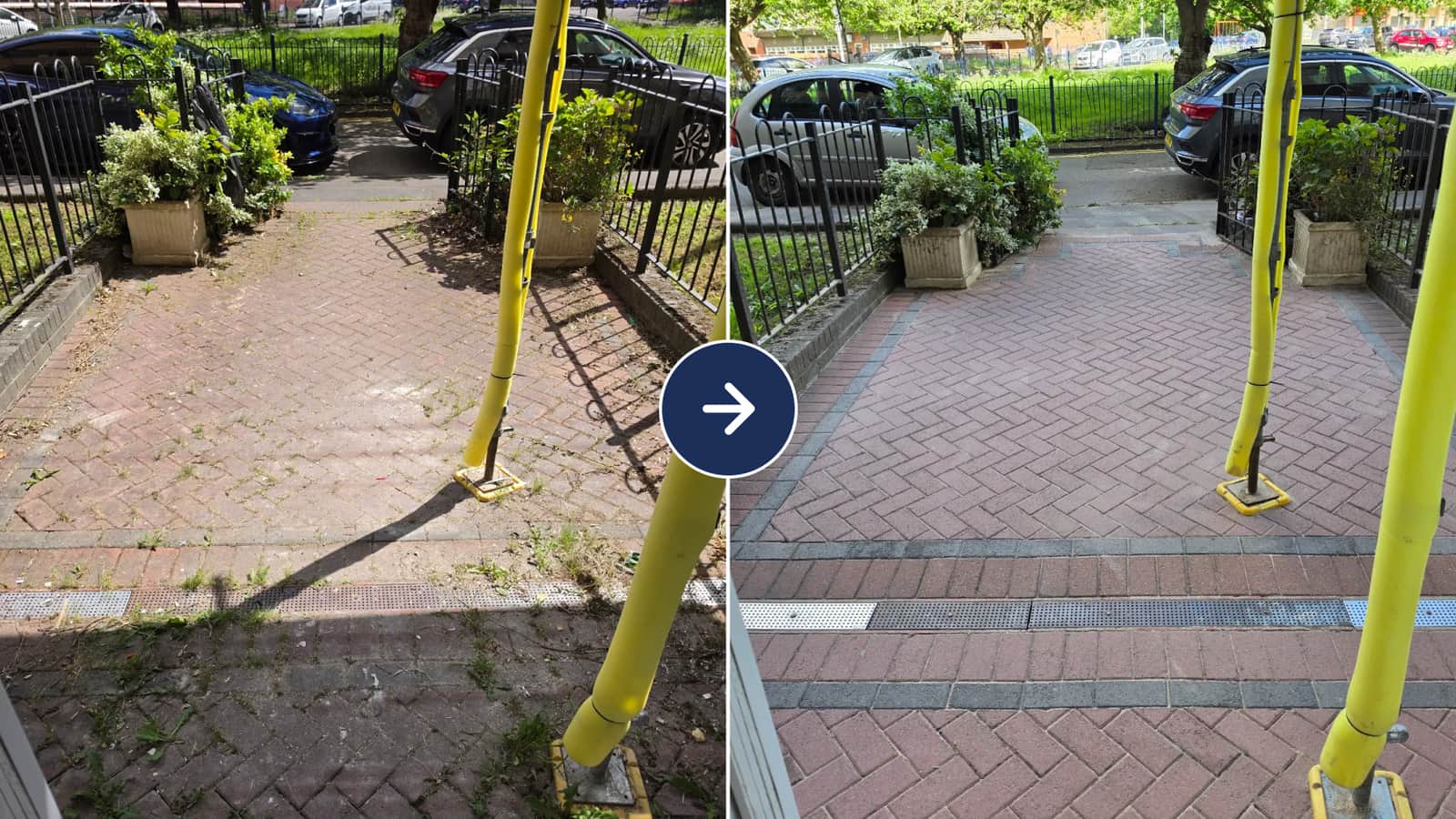
Pressure washing is genuinely excellent for what it’s built for: driveways, patios, paths, and other hard, non-porous surfaces that can handle mechanical force. We use surface-matched pressure for each job — enough to shift ground-in oil stains, moss, and years of grime, without over-blasting a surface that doesn’t need it.
It’s the right choice for:
- Driveway and patio cleaning — concrete, tarmac, and block paving all hold up well to properly calibrated pressure washing, including block paving re-sanding afterwards.
- Garden paths, forecourts, and other hard landscaping.
- Removing oil spills and heavy tyre marks from concrete.
When steam cleaning is the right choice
Steam cleaning earns its place anywhere high pressure would do more harm than good. Instead of relying on force, 150°C superheated steam uses heat to lift dirt and organic growth, leaving the surface underneath completely untouched.
It’s the right choice for:
- Historic sandstone and tenement stonework — a huge share of Edinburgh’s building stock, and exactly the kind of soft, porous masonry that pressure washing can permanently scar. We’ve written a full guide on why standard jet washing damages sandstone if you want the detail.
- Roof tiles — high-pressure water forced under or between tiles is a common cause of leaks and cracked or dislodged tiles, so we use low-pressure soft-wash treatments instead, never jet washing directly on the roof.
- Conservatory roofs — polycarbonate panels and seals don’t stand up to high pressure.
- Moss, algae, and lichen anywhere you actually want it gone for good — steam kills the roots and spores rather than just knocking the visible growth off the surface, which is why it doesn’t grow straight back in a few months the way pressure-washed growth often does.
The one-question test
If you’re still not sure which your job needs, ask yourself: would I be comfortable scrubbing this surface hard with a stiff wire brush?
- Concrete driveway, tarmac, block paving — yes, no problem. Pressure washing.
- Sandstone, tenement stone, roof tiles, polycarbonate — no chance. Steam cleaning.
That’s genuinely most of the decision. The rest comes down to what’s actually growing or staining the surface, which is exactly the kind of thing worth a quick call rather than guessing.
Get the right method for your property
We carry both pressure washing and superheated steam cleaning equipment on every job, so you’re never stuck with the wrong tool for your surface. Tell us what needs cleaning — driveway, roof, sandstone, or all three — and we’ll tell you honestly which method it actually needs. Request your free, no-obligation quote today.
Need this done?
Get a free steam cleaning quote
150°C low-pressure steam — the safe way to clean Edinburgh's sandstone and historic stonework.
View Steam Cleaning