31 August 2026
Graffiti Removal for Edinburgh Shopfronts: What Business Owners Should Know Before Booking a Cleaner
Graffiti on a shopfront does more than look bad for a few days. Left in place, it signals that nobody’s watching the property, which is exactly what invites the next tag — and the one after that. Speed matters here more than almost any other exterior cleaning job, but speed on the wrong surface can also do real damage. Here’s what to actually check before booking someone.
Why removal speed matters
Fresh paint is far easier to lift than paint that’s had weeks to cure and bond with the surface underneath, particularly on porous materials like sandstone and render. There’s also the visibility problem: an unaddressed tag tends to attract more of the same within days, turning a single-panel job into a much bigger clean-up. Getting it dealt with quickly is genuinely one of the cheapest ways to keep a shopfront looking cared-for.
The surface determines the method — not the other way round
The single biggest factor in a safe graffiti removal job isn’t the paint, it’s what’s underneath it. Sandstone, render, brick, metal shutters, and glass all react differently to the same treatment, so the right approach starts with identifying the surface, not reaching for the strongest available method.
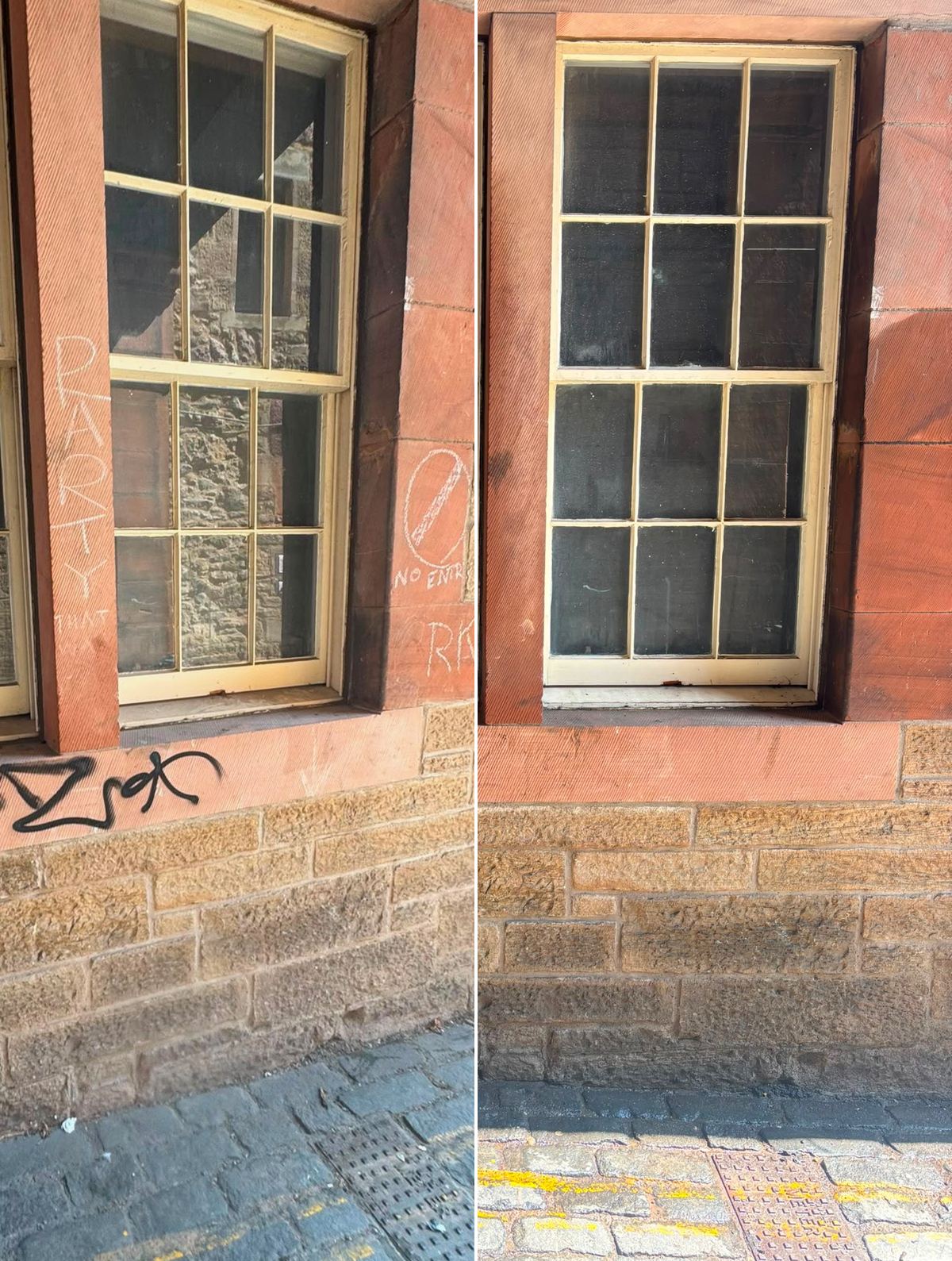
- Sandstone and render — porous surfaces need a gentler, chemical-led approach. The same high-pressure jet washing that damages historic stonework can just as easily scar a shopfront’s stone facade while trying to remove paint, turning a cosmetic problem into a structural one.
- Brick — similarly porous, and prone to the paint soaking in deeper than it looks if left too long, which is another reason speed matters.
- Metal shutters — durable enough to take hot pressure washing in most cases, but still worth a test patch to check the paint finish underneath isn’t affected.
- Glass — usually the most forgiving surface, though careful technique still matters to avoid scratching.
Why we always run a test patch first
Before treating the full area, a small, inconspicuous section gets treated first to confirm the removal method lifts the paint cleanly without staining or damaging what’s underneath. It adds a few minutes to the job and avoids the far bigger problem of finding out the hard way that a treatment wasn’t right for that particular render or stone.
What removal actually involves
Depending on the surface, we use biodegradable graffiti-removal treatment, hot pressure washing, or low-pressure steam — matching the method to the material rather than using one approach everywhere. The area is then fully rinsed to clear paint residue and any treatment chemicals, leaving no film behind that could interfere with future repainting or discolour over time.
Stopping it coming back
Removal deals with the tag that’s already there. An anti-graffiti coating deals with the next one — it’s a protective layer applied afterwards so future tags wipe off with water rather than needing another full treatment. For shopfronts in areas with repeat tagging, it’s usually the difference between one clean and a recurring monthly problem.
Get it dealt with fast
We identify the surface, run a test patch, and use the removal method that’s actually right for your shopfront — sandstone, render, brick, metal, or glass. You’ll get honest advice on whether an anti-graffiti coating is worth it for your location. Request your free, no-obligation quote and we’ll get back to you within a working day.
Need this done?
Get a free graffiti removal quote
Fast, surface-safe graffiti removal for shopfronts, walls, and shutters across Edinburgh.
View Graffiti Removal